Weddings & Elopements
Luxury Weddings & Elopements
From grand celebrations to intimate elopements, we plan weddings that feel unmistakably yours.
Your wedding should feel like you, not a template. We take the time to understand your story, your taste and the way you want the day to feel, then plan and style every element around it. Some of our couples marry at home in the UK with two hundred guests; others fly to a hilltop in Puglia with twelve. Both are weddings we love to plan.
This page covers the questions couples ask us first: the difference between a wedding and an elopement, what marrying abroad actually involves legally, what it costs in the UK and across Europe, and where our couples choose to marry. If you would rather just talk it through, we are always happy to do that instead.
Weddings or elopements
The line between the two has blurred. What matters is not the label but how many people are in the room and how much of the day you want to organise.
A full wedding
Thirty to two hundred guests, a ceremony and a reception, suppliers to coordinate and a timeline to hold it together. Most take twelve to eighteen months to plan, and the venue and catering will account for around half the budget.
See our venues →An elopement
Just the two of you, or a handful of people. No seating plan, no top table, no running order beyond the ceremony and a very good dinner. Can be planned in a few months, and the whole cost sits closer to a UK reception for thirty.
Talk to us →Something between
A small ceremony abroad with twenty of your closest people, then a party at home for everyone else. Increasingly common, and often the one that keeps both the budget and the family happy.
How we plan it →
Tell us your date and we will take it from there.
The paperwork, the budget and the venue search are all ours to handle. A first conversation costs nothing and usually saves months.
Legal requirements in the UK and Europe
This is the part couples worry about most, and the part that varies most by country. The short version: marrying legally abroad is paperwork-heavy almost everywhere, and it is entirely manageable with enough notice.
Marrying in the UK. You give notice at your local register office at least 28 days before the ceremony, and both of you must have lived in the district for seven days beforehand. Civil ceremonies now account for the overwhelming majority of marriages in England and Wales, at around 86 per cent.
Marrying elsewhere in Europe. As a UK national you will usually need a Certificate of No Impediment, issued by a Superintendent Registrar after you give notice at home. Most countries will also want your passport, birth certificate, and evidence that any previous marriage has ended, all translated and often apostilled.
| Country | Roughly what is involved | Residency |
|---|---|---|
| Portugal | Around four to six weeks of paperwork. One of the most straightforward in Europe. | None |
| Italy | Nulla osta, atto notorio, sworn translations and legalisation at the comune. Allow nine to twelve weeks, and arrive a few working days early. | None |
| Greece | Documents translated and certified, plus proof you are both free to marry. Filed with the local municipality. | None |
| Spain | Civil marriage generally requires one partner to be resident, which rules it out for most visiting couples. A symbolic ceremony is the usual route. | Usually required |
| France | At least one partner must live in the commune for around 30 to 40 days before the ceremony, which makes a legal French wedding impractical for most. | Required |
Requirements change and vary by region and nationality. Always confirm with the relevant consulate or town hall, and give yourself more notice than you think you need. We go through it with every couple we plan for.
Symbolic or civil
A civil ceremony is the legally binding one, conducted by a registrar or municipal official with witnesses present, and it is what produces your marriage certificate. Where a country makes that straightforward, as Italy and Portugal do, many couples marry legally on the day itself.
A symbolic ceremony has no legal effect. In every other respect it is identical: vows, an officiant, readings, witnesses, the walk down the aisle and the photographs. The legal marriage happens quietly at home, usually at a register office a week or two before or after, and nobody at the celebration can tell the difference.
Neither is better. A symbolic ceremony removes the paperwork risk entirely and gives you complete freedom over where and when you marry, including places no registrar will travel to. A civil ceremony abroad means the day you celebrate is the day you legally married, which matters to some couples a great deal. We will tell you honestly which is more sensible for your country and your timescale.
What a wedding costs in the UK and Europe
Figures below are the most recent national averages, published in 2026, alongside our own guide ranges for couples marrying in 2027 and 2028. What you actually spend depends far more on guest numbers than on country.
The two big UK surveys disagree slightly: Bridebook puts the 2026 average at £20,604 across roughly 7,000 couples, Hitched at £21,990 across 2,020. (Sources: Bridebook UK Wedding Report and the Hitched National Wedding Survey.) Both exclude the ring and the honeymoon. Region matters enormously, with London averaging around £24,600 against £17,300 in the North West. It is worth knowing that 56 per cent of couples overspend their original budget, by an average of around £4,800. Per-guest spend has risen roughly 4 per cent a year, so if you are marrying in 2027 or 2028 it is sensible to build that into the budget rather than planning to this year's figure.
A destination wedding is not automatically cheaper, but it is usually smaller, and that is where the saving comes from. Below are the ranges we see across the regions we plan in, all in, for a wedding of roughly a hundred guests.
| Where | Guide range | Notes |
|---|---|---|
| United Kingdom | £20,000 to £22,000 | National average; London and the South East run well above it |
| Puglia, Italy | €35,000 to €50,000 | The best value of the major Italian regions |
| Cádiz, Spain | €28,000 to €40,000 | Quieter and cheaper than the Costa del Sol next door |
| Tuscany and the Italian Lakes | €45,000 to €70,000 | The most competitive dates and the highest venue fees |
Venue hire alone is a much smaller number. Across the venues we work with it runs from around €3,700 to €10,000 for exclusive use, with catering, styling and entertainment making up the rest.
The best time of year for a wedding
Season decides three things at once: the weather, the price and whether your date is even available. Here is how the calendar actually breaks down in the UK and around the Mediterranean.
Summer weddings in the UK. Peak season runs May to September, and it is where most couples land: 40 per cent of UK weddings took place in summer in 2025, with a further 28 per cent in autumn. August is the single busiest month at 14.3 per cent of all marriages, and Saturday is the busiest day at 41.9 per cent of ceremonies. That demand has a price. Peak Saturday surcharges at popular venues can run £3,000 to £8,000 above the equivalent off-peak date, and availability at good venues disappears eighteen months out.
Winter weddings in the UK. Only about 7 per cent of couples marry in winter, and January is the quietest month of the year at 2.6 per cent. That is precisely the argument for it: off-peak dates can save 30 to 40 per cent on venue costs, your first-choice venue is likely to be free, and the suppliers you want are far more likely to be available. The trade-offs are real too, with short daylight for photographs and outdoor plans that need an indoor answer. December weddings cluster mid-month and in the days between Christmas and New Year.
Shoulder months are the value. April, May, September and October carry much of the appeal of summer at a fraction of the competition. September in particular has been the fastest-growing month in the UK, driven by lower prices and better light for photographs.
Marrying in the Mediterranean
The season runs April into October and it is a long one. These are average daytime highs across the regions we plan in, from Cádiz and Málaga to Puglia and Tuscany.
● The months we recommend most.
May, June, September and early October are the ones we steer couples towards. Warm enough to eat outside all evening, without the ferocity of July and August when much of southern Europe passes thirty degrees and the coast fills with holidaymakers. Venue fees follow the same curve: in Puglia, for instance, the main wedding day costs around €500 less outside high season, and nightly rates drop by €1,500.
Two things worth knowing if you are marrying abroad. Much of Italy closes around Ferragosto in mid-August, suppliers included. And school holidays shape who can actually come, which matters more for a destination wedding than a local one.
Our couples' favourite destinations
Six countries, each with a very different feel, budget and legal process.
Italy
Six regions and six different weddings, from lakeside villas on Como to masserie in Puglia and terraces above the Amalfi Coast. Legally straightforward with enough notice, and the food does half the work.
Explore Italy →Spain
Andalucía, the Costa del Sol, Cádiz and Catalonia. Reliable sun from April to October, short flights, and better value than most of the Mediterranean. Usually symbolic rather than civil.
Explore Spain →United Kingdom
Country houses, castles and coastal barns, with no paperwork to translate and no flights for your guests. The simplest legal route of all, and the easiest for older relatives.
Explore the UK →Portugal
Quintas in the Douro, clifftops on the Algarve and palaces around Sintra. Legally the most workable of the lot for foreign couples, at around four to six weeks of paperwork.
Explore Portugal →Greece
Island light, whitewash and the sea below you. Santorini and the Cyclades for drama, the Ionian islands for green hills and shade. Legal marriage is possible with translated documents.
Explore Greece →France
Châteaux in the Dordogne, vineyards in Provence and the light on the Côte d'Azur. The residency rule makes a legal French wedding impractical, so almost every celebration here is symbolic.
Explore France →
How we help
Whether you need us from the very first idea or just for the day itself, we shape our service around you.
Wedding Planning
Full-service planning from the first idea to the last dance. We shape the concept, set and manage the budget, book every supplier and build the timeline that holds the whole day together. Charged at €60 per hour + VAT.
Learn more →On-Day Coordination
Planned it yourselves? We step in for the final weeks, take on your suppliers and your running order, then quietly run the day itself so you and your families can be fully present. From €750 half day, €1,400 full day + VAT.
Learn more →Venue & Vendor Sourcing
We know the venues and the suppliers across Spain, Italy and the UK. From securing your setting to finding caterers, florists, photographers and entertainment, we handle every introduction.
Learn more →Meet the team behind Swish Soirées
We are a small, dedicated team of planners, designers and coordinators, bringing warmth, calm and years of experience to every celebration we take on.

Wes
Our founder and the calm hand at the centre of every celebration.

Miriam
Six years of planning and an eye for detail that misses nothing.

Vicky
Creative, steady and brilliant with the little personal touches.

Vivian
Bright, can-do energy and our on-the-day coordination specialist.
What our couples say
Calm, Professional and Completely on It
Miriam and Vicky were incredible. There is so much going on behind the scenes at a wedding that you simply don't realise until you start planning one. Venue arrangements, catering, flowers, music, photography, transport, timings, guests and dozens of other small details all need to come together at exactly the right time. What impressed us most was how calm they were. No drama, no unnecessary fuss and no constantly coming over to us with questions. At one point there was an issue with one of the suppliers, and it was dealt with before we had even really noticed there was a problem.
They Felt More Like Friends by the End
From the very first call, the Swish Soirées team made us feel comfortable. We were organising our wedding from Ireland and had absolutely no clue where to begin with Spanish suppliers, timings or some of the practical things involved in getting everyone over there. Nothing was ever too much trouble. We changed our minds several times, added things, removed things and probably sent far too many messages, but they were always patient with us. By the time the wedding arrived, it genuinely felt like we had friends helping us rather than a company we had hired.
Best Decision We Made
Vicky was an absolute lifesaver. I'm naturally quite organised, so I initially wondered whether we really needed a wedding planner. About two months into planning, I realised the answer was definitely yes. Vicky took so much pressure off us and somehow kept track of every little detail without making the whole thing feel complicated. There were a few last-minute changes with transport and seating on the day, and we didn't even know about them until afterwards because Vicky had already sorted everything. That was probably the biggest compliment we could give her.
Miriam Was Worth Her Weight in Gold
We honestly don't know how we would have managed without Miriam. Planning our wedding in Spain while living in the UK was exciting, but there were so many things we hadn't even thought about. Miriam seemed to have an answer for everything and was always calm, friendly and reassuring, even when I was stressing over tiny details. She helped with suppliers, timings, arrangements and all those last-minute bits that suddenly appear in the final few weeks. On the wedding day, everything just flowed. We didn't have to chase anyone or worry about what was happening next. We could actually enjoy our wedding instead of spending the day organising it.
Read more reviews from our couples
Wedding and Elopement Questions
Costs and legal requirements reviewed August 2026. Requirements change, so always confirm with the relevant consulate or town hall before you book.
How much does a wedding typically cost?
+
The honest answer is that averages are a poor guide, but they are a place to start. The two big UK surveys put the 2026 average at £20,604 and £21,990, both excluding the ring and the honeymoon, and both agree the average spend per guest is around £272. Venue hire and catering together usually account for 45 to 51 per cent of the total, which is why those two decisions shape everything else. Abroad, we see roughly €28,000 to €40,000 for a hundred guests in Cádiz, €35,000 to €50,000 in Puglia and €45,000 to €70,000 in Tuscany or on the Italian Lakes. What we would tell you in a first call is that guest numbers move the figure far more than the country does, and that 56 per cent of couples overspend their original budget by an average of around £4,800. We build an itemised budget before you commit to anything, and we hold a contingency in it.
How far in advance should we book our wedding venue?
+
Twelve to eighteen months for most weddings, and eighteen to twenty-four for a summer Saturday at a venue you have set your heart on. Exclusive-use properties are the tightest, because they hold far fewer weddings a year than a hotel does, so the good dates go first. For destination weddings the constraint is often not the venue at all but the paperwork: a legal wedding in Italy can take nine to twelve weeks of documents, and that has to be planned backwards from the date. If you are flexible on the day of the week or willing to look at May, June, September or October rather than late July, you will find far more availability and pay noticeably less for it.
How do we choose the right wedding venue?
+
Start with guest numbers, budget and the part of the country you want, then judge everything else against those three. In our experience the things couples underestimate are all practical: where the shade falls at four in the afternoon, how many people can actually sleep on site, whether the ceremony space works if it rains, when the music has to stop, and how far guests will be driving after dinner. Photographs flatter and websites rarely list what is genuinely included. We look at venues for a living and we have stood in most of the ones our couples are weighing up, so we can tell you what a place is like at capacity rather than empty. If you can visit, visit. If you cannot, we will go and send you an honest account.
What is included in the wedding venue hire price?
+
It varies enormously, and this is where most unpleasant surprises come from. Some venues include tables, chairs, linen, glassware, staff, a wet-weather marquee and clean-up. Others charge separately for every one of those, and a few require you to use their caterer or their bar. Accommodation is sometimes bundled into an exclusive-use fee and sometimes billed per night on top. Across the venues we work with, hire alone runs from around €3,700 to €10,000, while a packaged wedding weekend including rooms and a private chef can be €19,000 or more, which is why the headline numbers are so hard to compare. We ask for the full inclusions list in writing before anyone signs, and we read the contract for the clauses that catch people out.
How many guests should we invite to our wedding?
+
Guest numbers are the single biggest lever on your budget, because most of the cost scales per head. At roughly £272 a head in the UK, twenty extra guests is another £5,400 before you have changed anything else. They also drive the venue shortlist: plenty of beautiful properties top out at 80, and once you pass 150 the field narrows sharply. For a destination wedding, plan for a meaningful proportion to decline, particularly older relatives and families with young children. We would rather you built the budget around a realistic number and spent well on those people than stretched to accommodate a list that will not all travel.
Do we need a wedding planner or wedding coordinator?
+
They are different services and you may only need one. Full planning means we are with you from the first idea: concept, budget, venue, every supplier, the timeline and the day itself. Partial planning picks up a wedding you have already started. Venue and vendor sourcing is just the search and the introductions. On-day coordination is for couples who have planned it all themselves and want somebody to run the final weeks and the day so they can be present at it. Planning is charged at €60 per hour plus VAT, and coordination starts at €750 for a half day or €1,400 for a full day, plus VAT. Worth knowing: some venues, particularly exclusive-use estates abroad, require you to appoint a professional planner before they will confirm a booking, so it is sometimes not optional.
When is the best time of year to get married?
+
Broadly: May, June, September and early October around the Mediterranean, and May to September in the UK if you want summer, with October to March if you want the venue to yourselves at 30 to 40 per cent less. We have set the whole calendar out, with temperatures and the price differences, in the timing section above.
How do we find reliable wedding suppliers?
+
Personal relationships, not directories. The suppliers who matter most, photographers, videographers, caterers, florists, bands and DJs, hair and makeup, celebrants and transport, are booked on reputation, and the good ones in any region are known to the people who work there. That is the part we do: we have spent years building those relationships across Spain, Italy and the UK, and we know who is reliable in August, who is worth paying more for and who turns up early. If you are sourcing independently, ask for recent work at the same venue, check they carry insurance, get the cancellation terms in writing, and be wary of anyone who will not give you references.
What happens if it rains on our wedding day?
+
It is one of the first questions we ask a venue on a viewing, and it should be settled before you sign anything. Some venues include a marquee in the rate, some charge for one, some have an indoor space that genuinely works, and a few have no real answer at all. What matters is that the plan is one you would actually be happy with, because if it rains you will be using it. We also plan for it operationally: a call time for the decision, who makes it, and how the suppliers are told. On a destination wedding this is more important, not less, because a last-minute marquee hire in rural Puglia is not a phone call you want to be making yourself.
What should our wedding planning timeline look like?
+
Broadly: eighteen to twelve months out, set the budget and book the venue, and start the legal paperwork if you are marrying abroad. Twelve to nine months, book the photographer, caterer and band or DJ, and send save-the-dates. Nine to six months, florist, hair and makeup, transport and accommodation blocks for guests. Six to three months, invitations out, menu tasting, outfits fitted. Three to one month, final guest numbers, seating, running order and supplier schedules confirmed. The last fortnight is chasing, confirming and sending everyone the timings. Destination weddings shift earlier throughout, because paperwork and travel need more lead time. We manage this schedule for our couples so the decisions arrive spread out rather than all at once.
What does a wedding planner actually do on the day?
+
We arrive first and leave last. In practice that means being on site before the first supplier, checking the ceremony and dining spaces are set as agreed, receiving deliveries, briefing the venue team on the running order, and holding the timings so nobody has to look at a watch. If something goes wrong, and something usually does, you should not hear about it. A florist arriving late, a musician cancelling that morning, a delivery to the wrong gate: those are ours to solve. What couples tell us afterwards is not that the day was flawless but that they were able to be in it, which is the whole point.
How do deposits and payment schedules usually work?
+
Most venues take a deposit to secure the date, commonly around 50 per cent and usually non-refundable, with the balance due somewhere between a month and a week before the wedding. Suppliers vary: photographers and bands often take 20 to 30 per cent up front, caterers tend to invoice on final numbers about a fortnight out. Our own fees are staged across the planning period rather than taken in one lump. Two things worth doing: put every payment date in one schedule so nothing lands unexpectedly, and pay by card or bank transfer with a paper trail rather than cash, particularly abroad. We build that schedule for our couples and remind you before each date.
Do we need wedding insurance?
+
We would say yes, particularly for a destination wedding, and it costs very little against what you are spending. A policy typically covers supplier failure, deposits lost if a business folds, damage to attire or rings, and cancellation for reasons outside your control such as serious illness. Read what is excluded: many policies do not cover simply changing your mind, and cover for extreme weather is often narrower than people assume. Buy it when you pay your first significant deposit rather than later, because it will not cover anything that has already happened. If you are marrying abroad, check the policy covers events outside the UK.
Can we bring our own suppliers, or must we use the venue's list?
+
It depends entirely on the venue and it is one of the first things we check. Some run a genuinely open policy where you can bring anyone. Some have a recommended list that is a suggestion. Some require you to book catering and bar from their list, which is a requirement rather than a recommendation. A few charge corkage or forbid you bringing your own alcohol altogether. None of these is a problem in itself, but they change what a venue actually costs and how much freedom you have, so they belong in the comparison before you fall in love with a place.
How do we handle guests' travel and accommodation?
+
Give people as much notice as you possibly can, then make the decisions easy for them. We hold room blocks at a range of price points rather than one hotel, because a wedding party usually spans very different budgets, and we lay out the options on a simple page or card with the invitation. Transport is the part couples forget: if guests are drinking and the venue is rural, somebody has to organise coaches or minibuses, and that needs booking early in high season. For a destination wedding we would also suggest a welcome drink on the first evening, so nobody arrives cold to the wedding itself.
Are there music curfews or noise restrictions we should know about?
+
Frequently, and they vary far more than people expect. Some venues have no curfew at all. Others require music to move indoors at midnight, which is fine if there is a good indoor space and a problem if there is not. Some rural properties have agreements with neighbours that cap volume from a set hour. Occasionally a venue will support a late licence application. Ask the question early and get the answer in writing, because a curfew you discover late can reshape the whole evening, and it is one of the few things that cannot be worked around on the day.
Should we plan a welcome dinner or farewell brunch?
+
If your guests are travelling to be with you, yes. It is what turns a wedding into a weekend, and it is usually the part people remember most fondly, because it is relaxed in a way the wedding day cannot be. A welcome dinner also solves a practical problem: everyone meets before the ceremony rather than during it. Costs vary, and some venues price additional days separately, often somewhere between €2,000 and €3,000 for a full event. It does not need to be elaborate. Long tables, local food and a bar is enough.
How do we handle dietary requirements, especially abroad?
+
Collect them with the RSVPs rather than chasing later, and be specific: allergies, intolerances, vegetarian, vegan, religious requirements. Then get them to the caterer in writing with the final numbers, and make sure the kitchen understands severity, because an allergy and a preference are different things. Abroad, do not assume the vocabulary translates cleanly. We confirm dietary requirements in the local language and check the actual dishes rather than the categories, and we make sure the service team knows which guest is which before anyone sits down.
What about children at the wedding?
+
Whatever you decide, decide early and say it clearly on the invitation, because the alternative is a series of awkward individual conversations. If children are coming, they change the shape of the day: a long drinks reception is difficult for small children, and a late dinner even more so. Practical things that help are a shaded space to retreat to, food served earlier, and someone to look after them during the meal and speeches. Some venues can arrange childcare; many cannot, and it is worth asking rather than assuming.
What costs do couples most often forget?
+
Transport for guests, supplier meals, corkage, cake cutting fees, overtime if the day runs long, and the second day if you are hosting one. Beyond that: your own travel and accommodation, a viewing trip if you are marrying abroad, alterations, postage on invitations, and the tips and thank-yous at the end. Individually these are small. Together they are routinely thousands, and they are the main reason 56 per cent of UK couples overspend their original budget, by an average of around £4,800. We put them in the budget from the start and hold a contingency on top, rather than discovering them in the last month.
Is a destination wedding cheaper than marrying at home?
+
Not per guest, usually. What makes it cheaper is that fewer people come. A hundred-guest wedding in Puglia costs more than a hundred-guest wedding in the North West of England; a forty-guest wedding in Puglia often costs less than either. Be honest with yourselves about numbers before comparing countries, and remember to count the costs that do not appear on a venue quote: flights and accommodation for you, a viewing trip, and the welcome dinner or farewell brunch that most destination weddings end up including.
Do we have to marry legally in the country we celebrate in?
+
No, and most couples do not. The usual approach is to complete the legal marriage quietly at a register office at home, then hold a symbolic ceremony at the destination. It is identical in every visible respect, and it removes any risk of foreign paperwork going wrong. Where the legal process is workable, as in Italy and Portugal, marrying on the day itself is a genuine option and some couples feel strongly about it. In Spain and France, residency requirements make a legal ceremony impractical for most visiting couples.
What is a Certificate of No Impediment?
+
A document confirming there is no legal reason you cannot marry. UK nationals obtain one from a Superintendent Registrar after giving notice at their local register office, and most European countries ask for it before a legal ceremony. Other nationalities should check with their own embassy, as the equivalent document differs. It has a validity period, so it needs to be timed rather than obtained as early as possible, which is one of the things we schedule for couples marrying abroad.
Do you plan weddings in the UK as well as abroad?
+
Yes. Most of our work is in Spain and Italy, but we plan and coordinate weddings across the UK too, and a good number of our couples do both: a small ceremony abroad and a celebration at home afterwards for everyone who could not travel.
Can you help if we have already booked a venue?
+
Yes, and a good number of our couples come to us exactly that way, with the venue secured and everything else still to do. We take on the suppliers, the budget, the timeline and the running of the day, or just the final weeks and the day itself if that is all you need.
How many guests will actually come to a destination wedding?
+
Fewer than you invite, and it is worth planning around that from the start. Couples marrying abroad typically see a meaningful proportion decline, particularly older relatives and families with young children. Give people as much notice as you can, be clear about likely costs early so nobody is embarrassed, and treat the final number as a range rather than a figure until invitations have been out for a few weeks.
If you have any further questions, please view our Questions or contact us.
Tips, ideas & inspiration
Advice and inspiration from the weddings and events we plan across Europe and the UK.
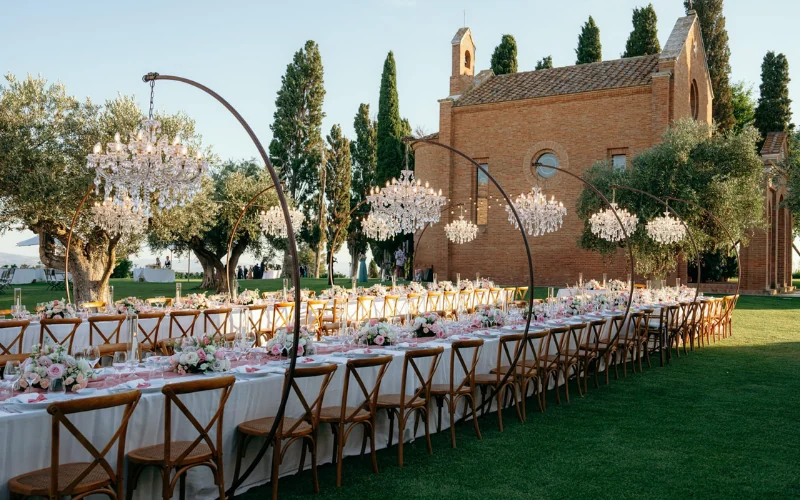
Wedding Lamps and Lighting on the Costa del Sol
Festoon, fairy lights, lanterns and uplighting, what each costs on this coast, and what your venue can actually take.
Read article →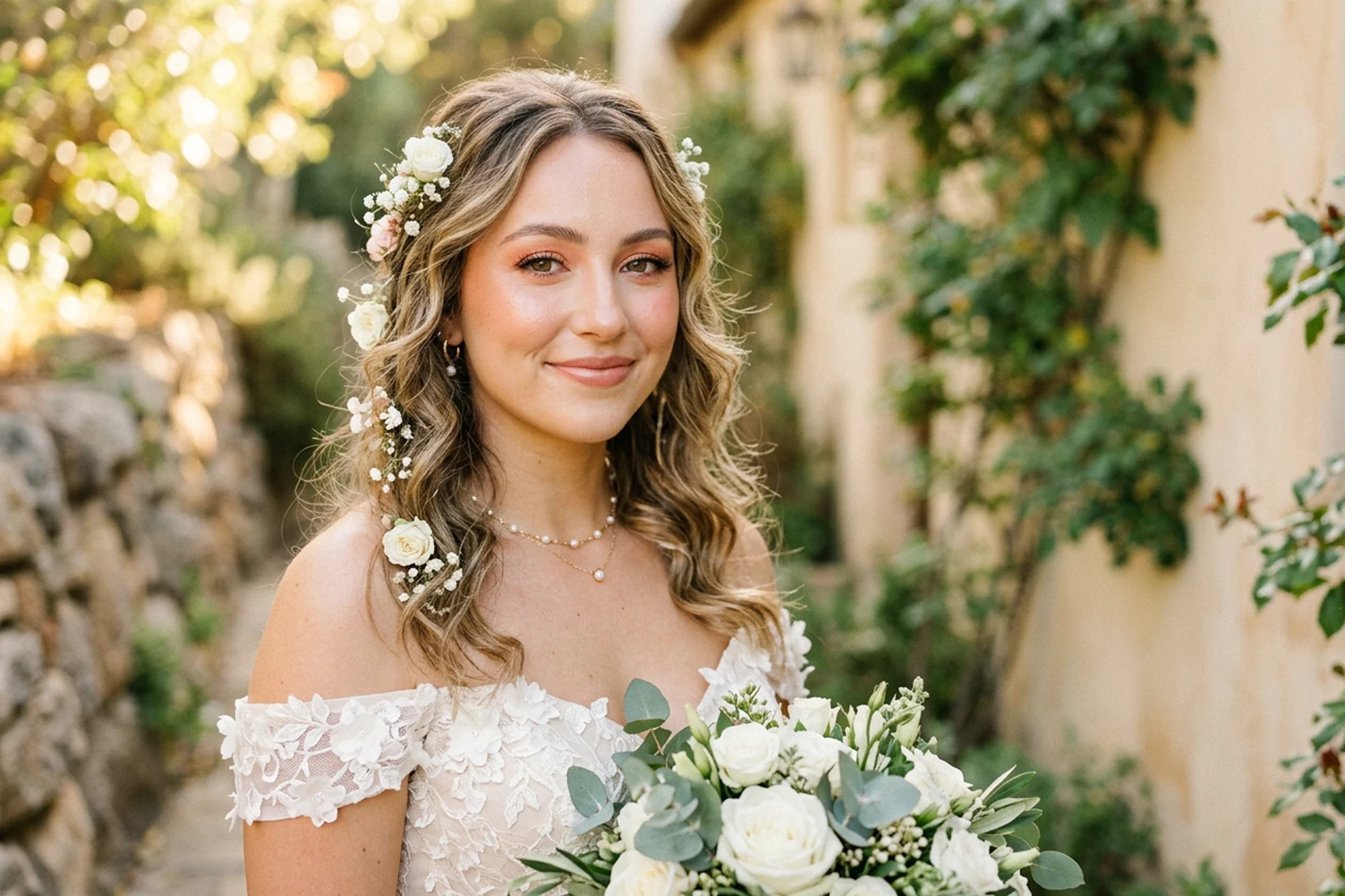
Choosing Your Wedding Day Makeup Artist
Why SPF ruins flash photographs, what makeup actually costs abroad, and how to trial and brief an artist properly.
Read article →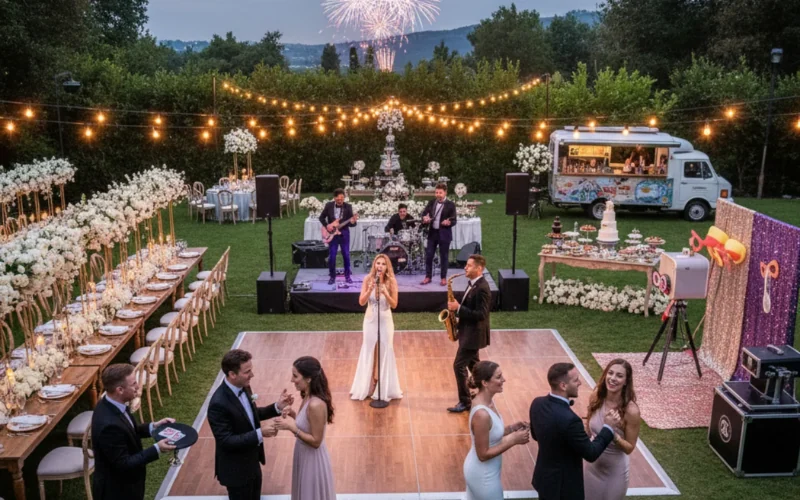
The Best Wedding Entertainment Ideas for a 2027 Wedding
From ceremony musicians and mobile bar services to booths, DJs and late night food, what actually works and roughly what it costs.
Read article →Read more from our Wedding Blog