Castles & palaces
Germany's signature venue, often with rooms for guests. Some can host the civil ceremony too.
- Usually: Exclusive use or venue packages
- Best for: 50 to 200 guests
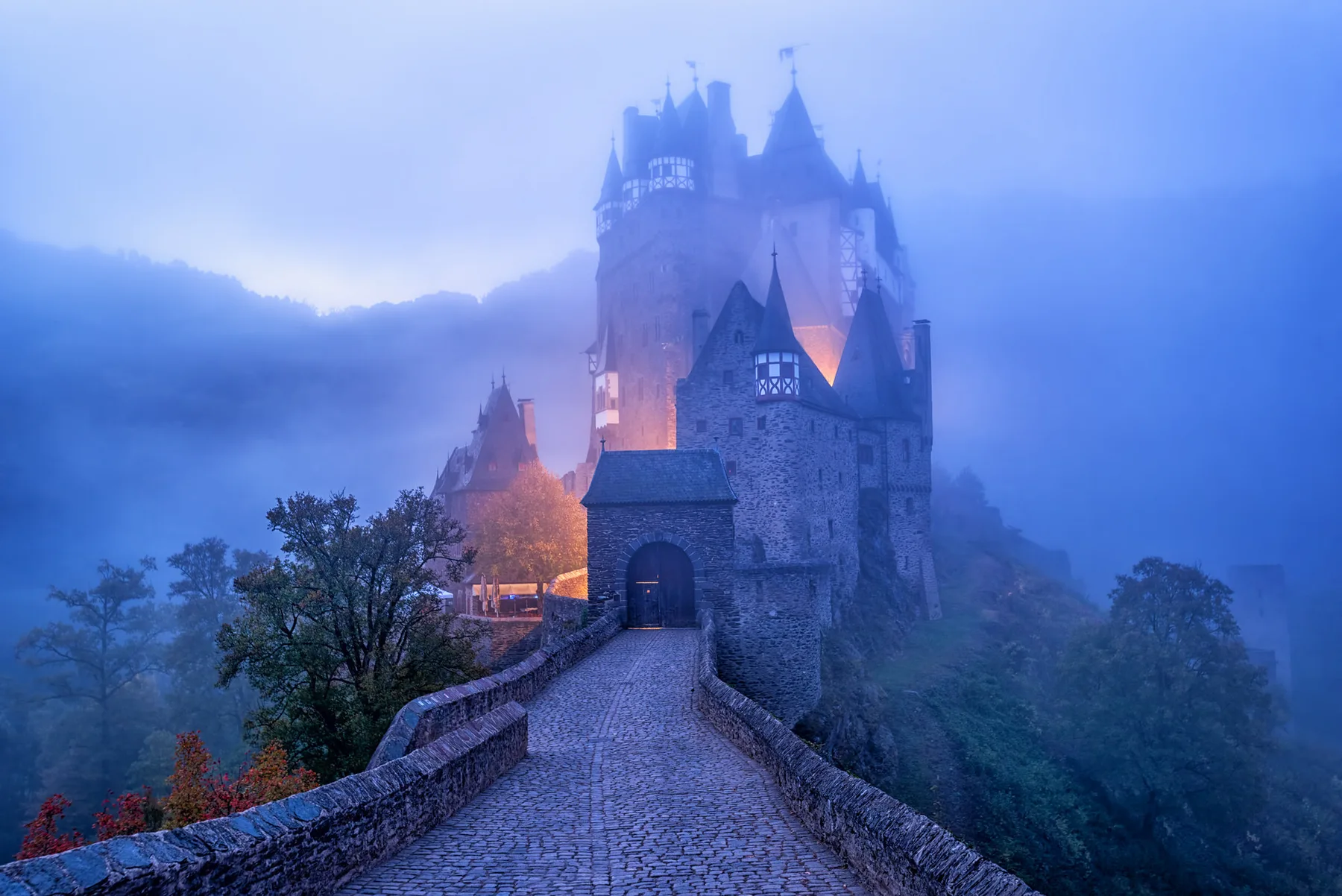
Fairytale castles in Bavaria, vineyards on the Rhine and Moselle, lakes and forests in the south and stylish city venues in Berlin, planned by a German-speaking team.
Castles, wine estates, lakeside hotels and city venues across Germany, planned in English and German.

Germany is one of Europe's most underrated wedding destinations. It has more castles than almost anywhere, wine valleys that look like paintings, Alpine lakes, and cities with a real sense of style. It is also close: under two hours by air from most UK airports, with excellent trains once you land.
It suits couples who want something a little different from the Mediterranean: long summer evenings rather than scorching heat, a castle or wine estate rather than a beach club, and food and wine that are a genuine highlight. Germany also offers good value compared with much of southern Europe, with an average wedding cost of €15,629 (Bridebook, 2025).
We plan weddings at wedding venues in the UK, Spain, Portugal, Italy, Greece and Germany. As destination wedding planners and on-the-day wedding coordinators with a German-speaking planner on the team, we deal with German venues, registrars and suppliers in their own language.
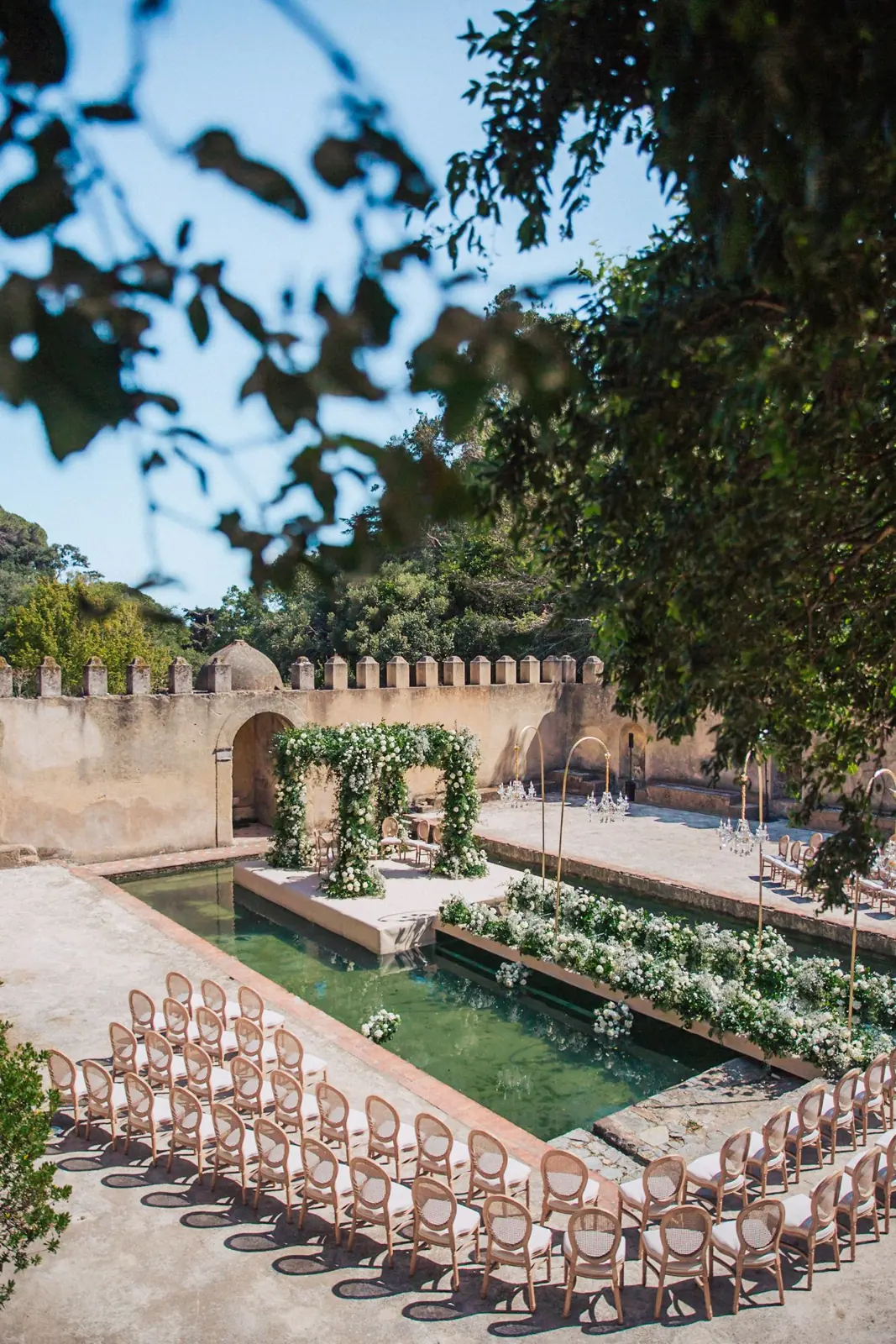
Germany's most famous wedding region: castles on hilltops, Alpine lakes, onion-domed churches and Munich's beer-garden warmth. Munich airport puts it all within easy reach.
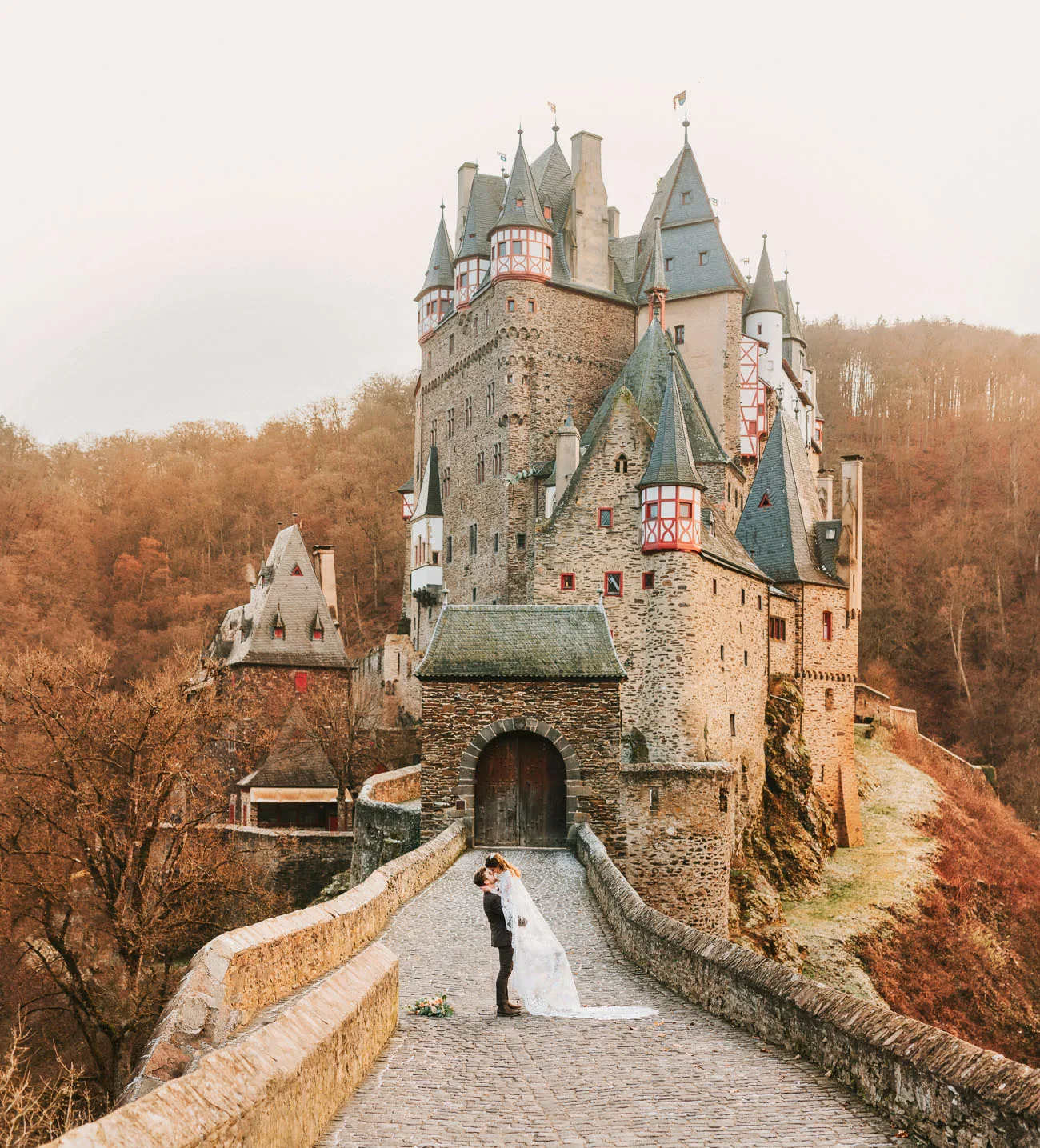
The Upper Middle Rhine Valley, a UNESCO World Heritage Site, is a gorge of castles, terraced vineyards and riverside villages. Several of its castles host weddings, and a river boat makes a memorable way to move guests between the ceremony and the reception.
The Moselle is quieter and even prettier in places, with steep vineyards and half-timbered wine towns. Wine estates here offer ceremonies among the vines and dinners paired with their own Riesling.
Why couples choose it: Frankfurt airport is close, the wine is a highlight for guests, and late summer and the autumn harvest are spectacular.
Watch for: hilltop castles can mean steep paths and steps, so think about older guests, and check where the evening party can be held and until when.
The Black Forest in the south-west is all dark pine forests, meadows and traditional farmhouses, with spa hotels and country inns that suit a relaxed, outdoorsy wedding. Baden-Baden adds grand spa-town elegance.
Lake Constance, shared with Austria and Switzerland, has a mild climate, island gardens, vineyards and lakeside hotels with Alpine views across the water. It is a natural choice if your guests are coming from several countries.
Berlin is for city weddings with character: converted industrial spaces, galleries, lakeside villas on the Wannsee and grand hotels, with a food and nightlife scene that keeps guests busy for the whole weekend. Nearby Potsdam adds palaces and parkland.
Hamburg offers harbourside venues and elegant villas on the Elbe, while the Baltic coast has white-sand beaches, seaside resorts and the chalk cliffs of Rügen for something completely different.
Dresden and Saxony in the east have baroque architecture, Elbe valley castles and good value.
See our venue hire guide for dry hire, exclusive use and all-inclusive explained.
Germany's signature venue, often with rooms for guests. Some can host the civil ceremony too.
Vineyard ceremonies and long dinners with the estate's own wines, on the Rhine, Moselle and in the south-west.
Ceremony, dinner and rooms in one place, with water and mountain views. See hotel venues.
Manor houses, farms and barns, from Bavaria to the Baltic. See rustic venues.
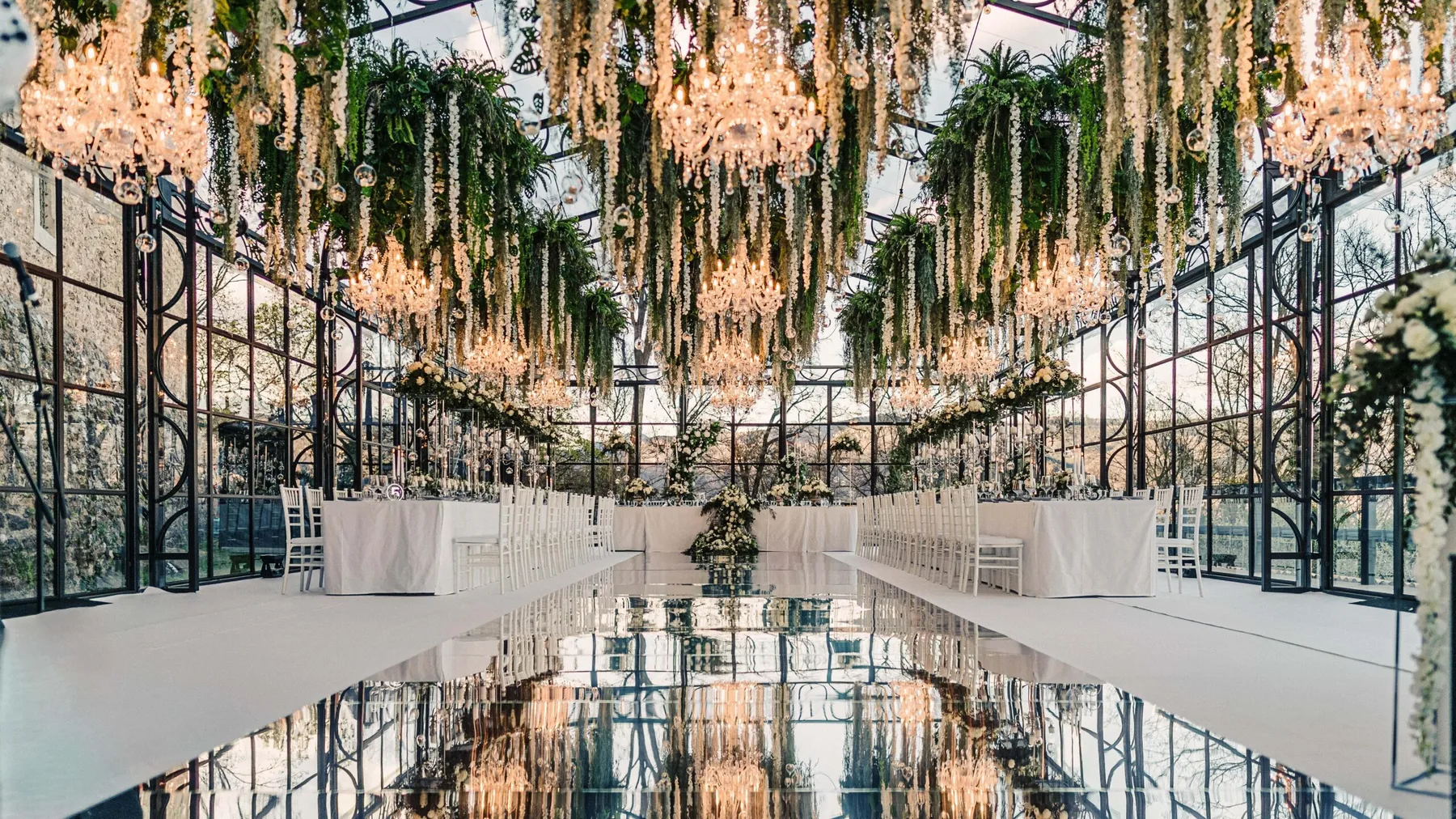
In Germany only a civil ceremony in front of a registrar from the Standesamt, the register office, is legally binding. A church wedding or a free ceremony (freie Trauung) is symbolic on its own, so couples who want both usually hold the civil ceremony first, sometimes on the same day.
Requirements vary between register offices and change over time, so we confirm the current rules with the office for your venue before you book.

May to September is the main season, with long, light evenings in June and July. September is a favourite for wine regions, as the harvest begins. Summer weather is warm rather than hot, but it can change quickly, so every outdoor plan needs a good indoor alternative.
Winter has its own magic: Christmas markets in December, snowy Alpine venues and candlelit castle halls. See our winter weddings guide.
| Months | What to expect |
|---|---|
| April & May | Spring blossom, fresh green, quieter and better value |
| June & July | Longest evenings and the most popular dates |
| August | Warmest month, school holidays, busy venues |
| September & October | Wine harvest, golden forests, cooler evenings |
| November to March | Christmas markets, snow in the Alps, cosy castle halls |
The average German wedding costs €15,629 (Bridebook, 2025). Venue hire alone averages around €2,901, or about €8,568 including catering, with in-house catering averaging €62 per guest (Bridebook, 2026). Castle venues and Munich sit well above the average.
| Country | Average wedding | Guests | Source |
|---|---|---|---|
| Germany | €15,629 | Not stated | Bridebook Wedding Report 2025 |
| UK | £20,604 | Around 74 | Bridebook UK Wedding Report 2026 |
| Spain | €25,183 | 123 | Bodas.net, 2026 |
| Portugal | €21,127 | Around 100 | Fixando, 2026 |
| Italy | €23,781 | 106 | Matrimonio.com, 2025 |
| Greece | €20,000 to €40,000 | Around 100 | Big Fat Greek Day, 2026 (Crete and mainland) |
These are national averages, mostly for weddings by local couples. Destination weddings usually cost more because guests stay longer. We give you the full figure for every venue on your shortlist.
In English and German, from the first call to the last dance.
Castles, vineyards, lakes or city, matched to your guests and budget.
Venues worth seeing, with notes on access, curfews and wet-weather plans.
Standesamt paperwork handled in German, or a free ceremony planned in English.
Flights, trains, transfers and rooms, so guests know where to be.
Yes. Only a civil ceremony in front of a registrar from the Standesamt is legally binding in Germany. UK nationals usually need a Certificate of No Impediment or a similar proof of marital status, alongside passports and birth certificates, and the register office decides exactly which documents and translations it accepts (German Embassy London). Paperwork can take several months, so start early.
Not on its own. A church wedding or a free ceremony (freie Trauung) is symbolic unless you also have the civil ceremony at the Standesamt. Many couples hold the civil ceremony first, sometimes on the same day, or marry legally at home and hold a free ceremony in Germany.
Yes. Many castles and palaces host weddings, and in many towns the register office holds civil ceremonies at approved locations such as castles and historic buildings. Otherwise the castle can host a free ceremony and the celebration after the civil ceremony.
The average German wedding costs €15,629 (Bridebook, 2025). Venue hire averages around €2,901, or about €8,568 including catering, and in-house catering averages €62 per guest (Bridebook, 2026). For comparison, the average is £20,604 in the UK (Bridebook, 2026) and €25,183 in Spain (Bodas.net, 2026).
Bavaria is the most popular, with castles, Alpine lakes and Munich. The Rhine and Moselle valleys suit wine lovers, the Black Forest and Lake Constance suit relaxed country weddings, and Berlin and Hamburg suit stylish city weddings.
May to September, with the longest evenings in June and July and the wine harvest in September. Winter is lovely too, with Christmas markets and snowy Alpine venues, but needs an indoor plan.
Yes. Miriam is a fluent German speaker, so we deal with German venues, register offices and suppliers in their own language, and translate everything for you. Between us the team also speaks English and Spanish.
Yes. We plan weddings across Germany, from choosing the region and venue to the Standesamt paperwork or a free ceremony, guest travel and running the day. Planning is charged at €75 per hour plus VAT with a 10-hour minimum, and on-day coordination starts at €750 for a half day plus VAT.
More answers on our frequently asked questions page.

Miriam has six years of wedding planning behind her and speaks fluent German, so she deals with German venues, register offices and suppliers in their own language. Her guides draw on what she sees working on real wedding days.
6 years' experienceFluent GermanSwish Soirées planner
Meet the team →Advice and inspiration from the weddings and events we plan across Europe and the UK.
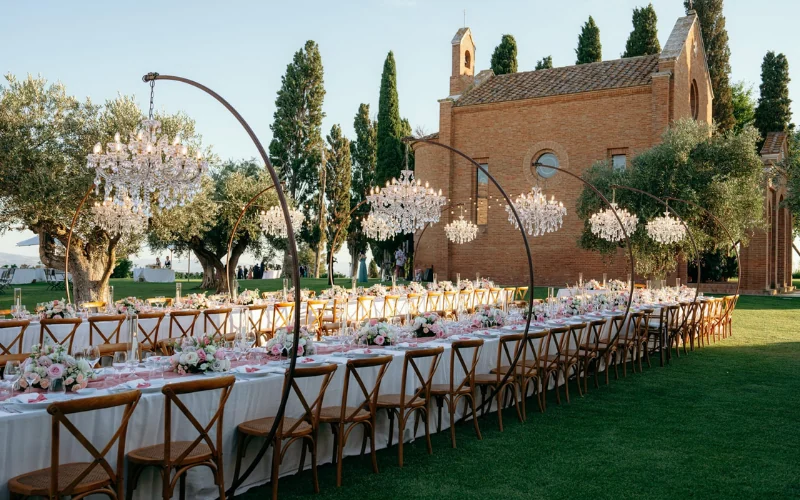
Festoon, fairy lights, lanterns and uplighting, what each costs on this coast, and what your venue can actually take.
Read article →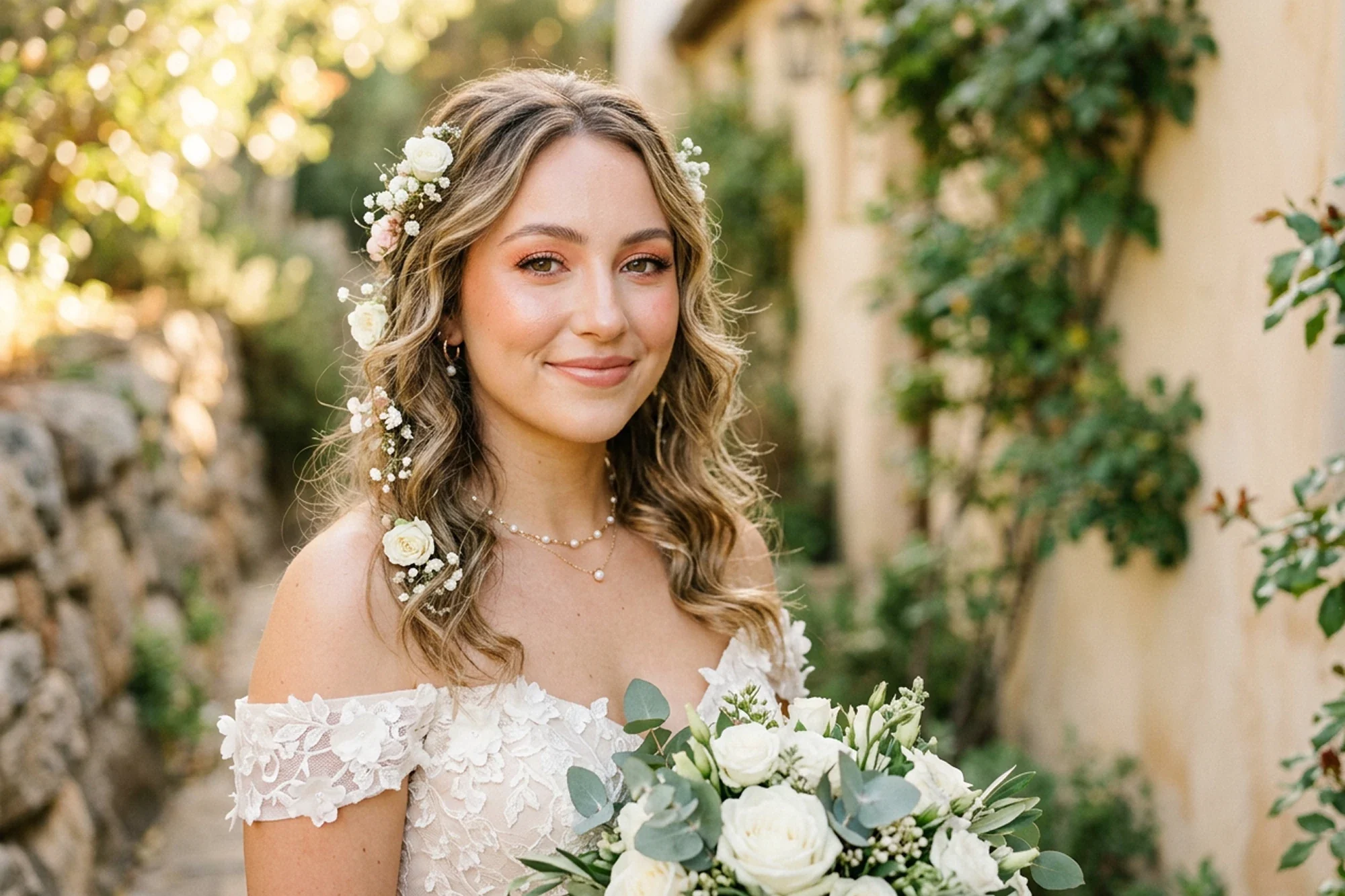
Why SPF ruins flash photographs, what makeup actually costs abroad, and how to trial and brief an artist properly.
Read article →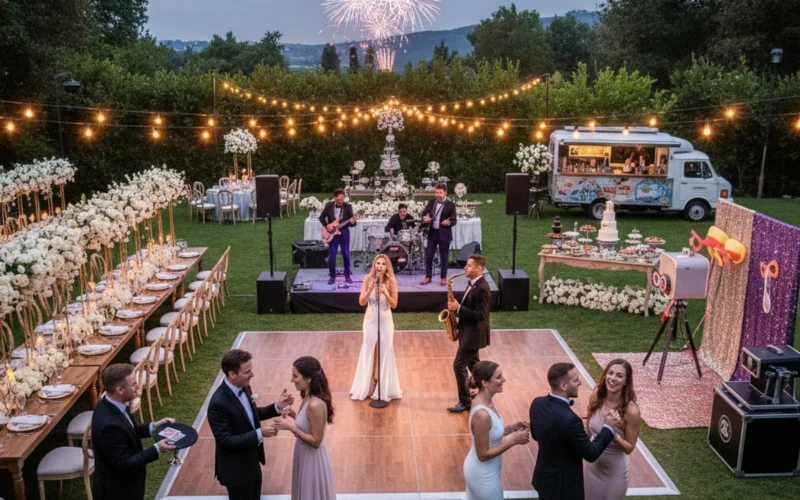
From ceremony musicians and mobile bar services to booths, DJs and late night food, what actually works and roughly what it costs.
Read article →Read more from our Wedding Blog